
In the State Hermitage Museum in St Petersburg, behind protective glass, lies a piece of dyed wool twenty-five centuries old: the Pazyryk carpet; the oldest known knotted carpet in the world, found preserved in the Siberian ice, and by the consensus of scholars tied by an Iranian hand. On the other side of the world, in London’s Victoria and Albert Museum, the Ardabil carpet has been drawing visitors for generations. Between those two works, and the thousands of carpets scattered from the museums of Paris to the auction houses of New York, runs a single unbroken thread: the Persian carpet; a poem this land has been composing knot by knot, and is still composing today.
From Pazyryk to the Safavid peak
Weaving on the Iranian plateau is older than recorded history itself; Achaemenid inscriptions and tablets speak of royal workshops and teams of weavers. But the turning point of the documented story is that Pazyryk carpet: a piece with horsemen and deer, fine weave and dyed wool, made around five centuries before the common era and preserved for us by the mercy of ice. Centuries later the Safavids took the art to its summit: Tabriz, Kashan and Isfahan ran royal workshops; court painters turned their hands to carpet design; and a global trade opened up. The Ardabil carpet, woven in 946 AH (1539 CE) and signed by Maqsud of Kashan, became the most famous carpet in the world; its twin hangs in Los Angeles. Safavid silk carpets even reached the Polish court, and the world later knew them by the name Polonaise. In those same years Dutch ships were carrying carpets from Bandar Abbas to Amsterdam; the story you read in this magazine’s From Isfahan to Amsterdam; carpets that were spread on Dutch painters’ tables and made immortal inside the frames of Vermeer and Ter Borch.
A geography of carpets: every town, another accent
Every weaving centre of Iran has its own accent. Tabriz, with firm drawing and bold colour; Kashan, with delicate floral rugs; Isfahan, with its compound medallion compositions; Qom, with soft and finely knotted silk; Kerman, with its garden fantasies; Nain, with its famous navy and ivory borders. And beyond the towns, the tribes: the Qashqai with geometric lion motifs and startling colour; the Baluch with deep reds and blacks. A carpet has a passport; an expert reads from the back of the weave whether the weaver was Turkmen or from Yazd, tribal or urban. And some accents have earned nicknames: Bijar, for its toughness and rich pile, is called the carpet of a hundred years, while Hamadan and Sanandaj each hold a share of this earthly music with schools of their own. This variety comes from the Silk Road and from peoples who each kept the memory of their own landscape in their patterns.
The language of motifs
The motifs of the carpet are the coded vocabulary of this art. The boteh; the famous teardrop the world knows as paisley; taken from the bent cypress, and read variously as the bowed head of humility and as the unopened bud of resilience. The Shah Abbasi palmette, with its arabesques that knot a whole world together. The tree of life, still green from ancient myth to the present; the maidan design, taken straight from Isfahan’s Naqsh-e Jahan Square onto the loom; and the garden scheme, heir to the Persian paradise; for the carpet is in its essence an everlasting garden; a garden that stays in bloom beneath your feet even in winter. The European word paradise itself descends from the Persian pairidaeza; and the carpet is that paradise’s pocket garden; a garden with no season at all.
The carpet in Iranian life
For Iranians the carpet was never merely a floor covering. In the older houses, the hand-woven carpet was the first layer of the home’s memory: children played hide-and-seek beneath it, brides brought their first carpet from their mother’s house, and a worn carpet, like a tired member of the household, was repaired again and again rather than set aside. In tribal weddings the loom itself was part of the dowry and part of the ceremony; a weaving daughter built her stake for her new life with her own skill. Prayer rugs, silk sajjadehs and the small cloths of the dining spread carried this art from the floor of the house into daily ritual. Ask an Iranian family for a photograph of their grandmother’s house and somewhere in the frame there will be a carpet; because in this land a house without one felt unfinished.
A few figures worth knowing
| Subject | Figure |
|---|---|
| Age of the Pazyryk carpet, the world’s oldest | about 25 centuries |
| Knots per square metre in a 50-raj carpet | over one million |
| Weaving time for a good average carpet | 8 months to several years |
| UNESCO inscription (Kashan and Fars) | 2010 |
Colour from the earth, soul from the knot
The authentic colours of the carpet come from soil and plant: madder, the root that yields dove-blood red; sparak for yellow; indigo for blue; walnut husk for brown; vine leaf for smoky green. Vegetable dyeing is still alive in workshops in Yazd and Kerman and in the villages of Fars, its secrets passed down breast to breast; plant colours age with the light of years but do not die; the trade calls the patina, and it is precisely what makes an old carpet dearer than a new one. And then the soul of the carpet: the knot. The Persian knot, asymmetric, is the finer and more precise hand, and in the best workshops it climbs past fifty raj, the rows of knots counted across the width; more than a million knots to the square metre. A skilled weaver ties some thousands of knots a day; a fine silk carpet stays on the loom for years, sometimes at the cost of a weaver’s eyes. That is why a carpet is read from the back; like a poem that speaks from every line.
The world market and the future
The hand-woven Persian carpet faces a hard market today: machine-made rivals, copied designs, sanctions and unstable exchange rates. Yet at the world’s great auctions historic Persian carpets still set records, and Sotheby’s and Christie’s headline their sales with them. In 2010 UNESCO inscribed the traditional skills of carpet weaving in Kashan and Fars on its list of the intangible cultural heritage of humanity; a world’s recognition of an art that still puts bread on many families’ tables. What matters for today’s buyer is this: a carpet is not a commodity; it is an art asset; like any authentic work, it does not get cheaper with the years. And in the modern home the carpet is no longer furniture’s dust sheet; it is an artistic element designers across the world have rediscovered; a centrepiece, a painting beneath your feet. Curiously, that rediscovery is running inside Iran as well: a new generation of designers and small independent workshops is pairing old motifs with today’s minimal palette; wall carpets, apartment-sized pieces and bespoke commissions for modern homes. The same thousand-year-old story, in today’s accent; and that is precisely the sign that this art has not become a museum piece.
To see, and to buy
There is no better place to begin than the Carpet Museum of Iran in Tehran; one of the world’s richest museums of this art, with works from the fifteenth century to the present, in the heart of the capital beside the Museum of Contemporary Art. If your road takes you to Kashan or Yazd, seek out the small workshops; a loom and a weaver moving silently row by row is one of the calmest scenes in the world. And if you are buying, remember three things: judge authenticity from the back of the carpet, not from the label; weigh plant dye with the eyes of the years; and do not hurry; a good carpet, like a good friendship, takes patience to find.
The Persian carpet is a storyteller that speaks in knots; every row a verse, and every motif a garden with no autumn.


Related stories
 Arts
The Visual Arts Department: A Language Without Borders
When we talk about Iran we usually reach for history and politics; yet Iran has another language, one that took shape thousands…
Read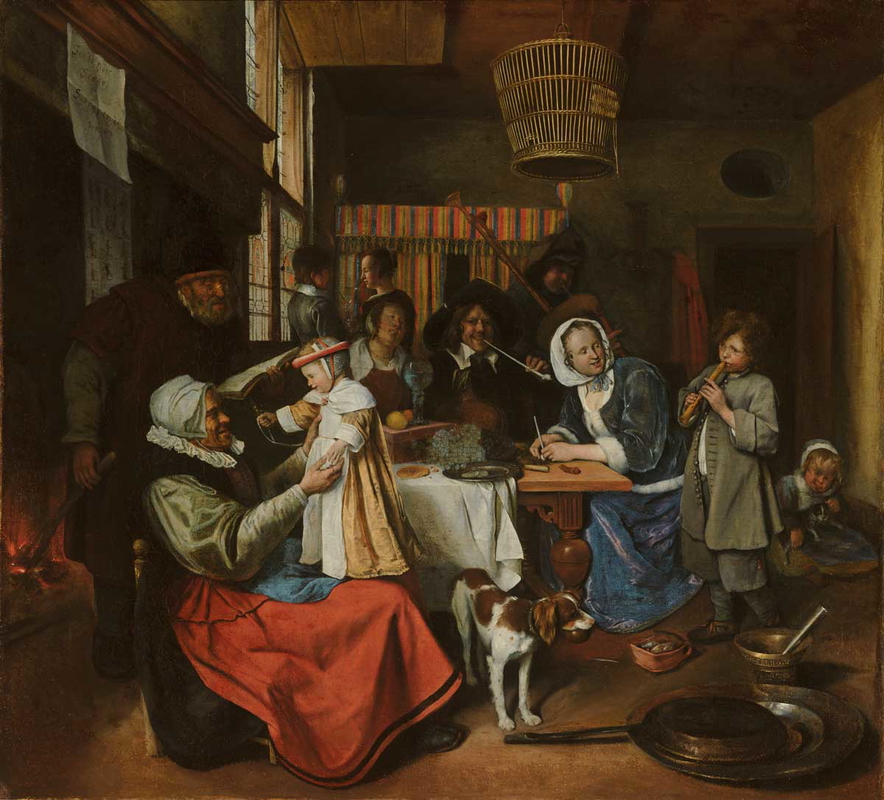 Arts
Between Isfahan and Amsterdam: A Seventeenth-Century Visual Dialogue
In the seventeenth century two golden ages ran in parallel: Safavid Isfahan and the Dutch Republic. Through Bandar Abbas, silk, saffron and…
Read