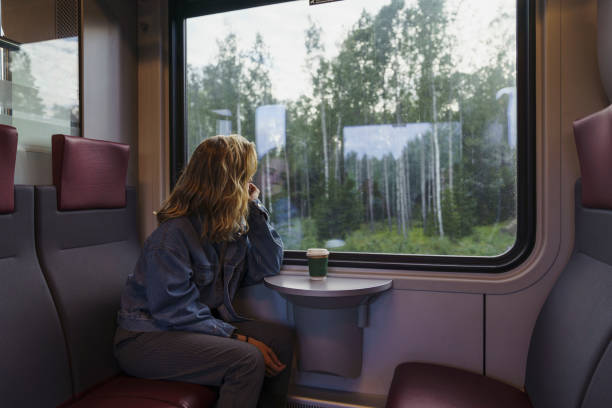
One morning you wake up and realise that before checking the time, you listened to the sound outside: is it raining or is it sunny? The same reflex you had years ago in your old city. In that moment, without noticing, your home has changed.
Psychologists of migration say a country does not become home through a decision. It is a process: gradual, quiet, occasionally painful and often sweet. So what exactly builds that transformation?
When a café becomes your café
Niloofar moved from Tabriz to Warsaw four years ago: “At first I went to cafés just to sit somewhere. After two months I chose the corner seat with my back to the wall, like our local café in Tabriz. After six months the waiter brought my americano without asking. That day I understood I have a life here too.” When you find places that know you, the bakery, the local park, the metro platform where you know which door to stand at, your mental map quietly gains colour.
When the new language finds its place
There is a fine line in the middle of the road: you move from “I understand” to “I think”. Arash left Isfahan for Berlin six years ago: “The day I first spoke German in a dream I was happy and frightened at once. It was as if my brain had surrendered.” The moment a new language enters your subconscious is a significant psychological sign: your mind has stopped translating and started living directly.
When your worries go local
One day you notice that instead of worrying about inflation back home, you are worried about next month’s rent. Instead of news from the other side of the world raising your pulse, it is the weekend weather. That shift of attention means one thing: you are putting down roots.
When a friend rings you for no reason
The most important sign of all. Delleram has been in Montreal for seven years: “At first I thought I would never find friends like the ones in Iran. I was right; they were not like them. But I had one friend who sometimes just asked how I was, for no reason at all. That was enough.” Sociologists say the feeling of home depends less on soil than on relationships: people who worry about you make your map domestic.
When you can be alone without feeling lonely
Perhaps the deepest sign. In the early months of migration, solitude is painful because it is empty. Later, solitude can be peaceful, because it is filled with the life you have built.
How long does it take?
Research on acculturation, including John W. Berry’s influential studies, suggests that for most migrants a first sense of belonging forms between three and five years, but the road is not straight. The first year is excitement and survival. The second often brings hidden depression or cultural fatigue. From the third year a hybrid identity starts to take shape, and later you arrive somewhere unexpected: home is neither there nor here; it is the thing you have built.
When you have two homelands
Some migrants say they can neither let go of the first homeland nor fully settle in the second. Psychologists call this bicultural identity, and it is neither a disorder nor a weakness. Many of the most creative people in history built precisely out of that distance, that border between two worlds.
A country becoming home does not mean forgetting where you came from. It means learning that you can love two places: one for who you were, one for who you have become.
For the curious, we have prepared a companion list of films, books and podcasts that tell this story precisely, from Brooklyn to The Farewell and from The Art of Belonging to the Persian podcast Khosoosi. It arrives in the next issue.